

All You Need to Know About Portal Development
November 27, 2025
Skincare SEO Strategies for Brands in the USA
November 27, 2025
Introduction to Custom Business Portals
In the evolving landscape of digital solutions, businesses are increasingly recognizing the significance of custom portals tailored to their unique operational needs. A custom business portal serves as a centralized online platform designed specifically for an organization’s requirements, allowing for enhanced interaction, data management, and streamlined processes. Unlike off-the-shelf solutions, which offer generalized features, custom portals are created with specific functionalities that align directly with business goals, ensuring a more effective use of resources and improved user experience.
The distinction between custom portals and pre-packaged software solutions lies primarily in their adaptability. Off-the-shelf products are often limited in scope, functionality, and flexibility, which may lead to organizations having to alter their existing processes to accommodate the software. In contrast, custom portals are developed from the ground up, allowing for greater customization and integration with existing systems and frameworks. This adaptability enables businesses to scale their operations and incorporate new features as they evolve.
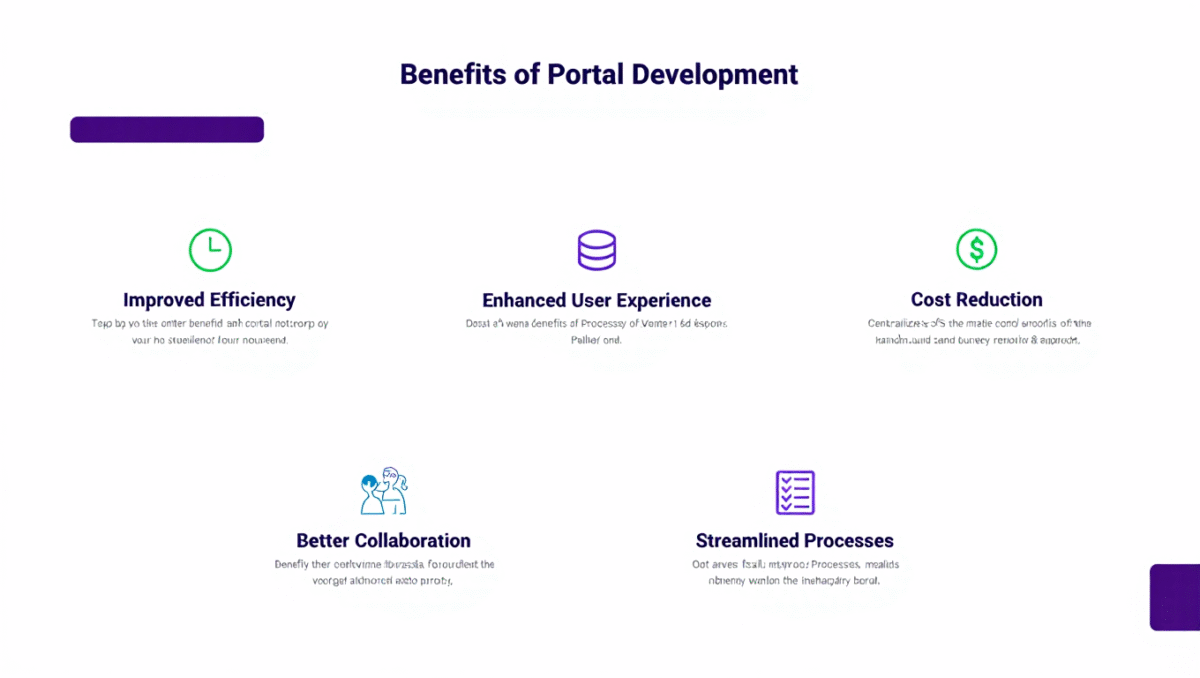
The increasing preference for custom business portals can be attributed to various factors, including the desire for enhanced control over workflows and data management, improved security measures, and greater alignment with customer needs. Organizations operate in diverse environments and face distinct challenges; hence, having a solution tailored to these specific contexts can lead to substantial efficiency gains. Furthermore, custom portals can foster better collaboration among team members and improved relationships with clients and stakeholders, resulting in higher overall satisfaction and loyalty.
As digital transformation continues to reshape the business world, the shift towards custom solutions is expected to grow, highlighting the pivotal role that custom portals play in achieving organizational success.
Enhanced User Experience
In today’s digital age, providing an exceptional user experience is paramount for businesses looking to thrive. A custom portal serves as a pivotal tool in enhancing this experience for both customers and employees. By adopting a tailored approach, organizations can create a platform that not only meets but anticipates the needs of its users.
One of the primary advantages of a custom portal is the ability to design personalized dashboards. These dashboards aggregate relevant information, allowing users to quickly access what they need without navigating through unnecessary clutter. Such personalization fosters a sense of ownership and satisfaction, as users can configure their experience to reflect their priorities and workflows. Furthermore, the capability of adjusting content based on user roles significantly improves the efficiency of accessing pertinent information.
A user-friendly interface is another cornerstone of enhanced user experience. A well-structured, intuitive design minimizes the learning curve, making it easy for individuals to engage with the portal. When users can navigate effortlessly, it leads to increased interaction and productivity. Additionally, responsive design ensures that the portal remains accessible on various devices, accommodating users who may prefer mobile access, thus broadening the user base.
The importance of effective design cannot be overstated. An aesthetically pleasing portal enhances engagement, as users are more likely to return to a visually appealing interface. Incorporating modern design principles and interactive elements, such as prompts and tooltips, not only captivates users but also guides them, enhancing overall functionality.
In summary, a custom portal significantly improves user experience through personalized dashboards, user-friendly interfaces, and thoughtful design. By prioritizing these aspects, businesses can create an environment that facilitates better engagement, ultimately driving success and fostering a loyal user base.
Improved Efficiency and Productivity
In the modern business landscape, organizations continually seek methods to enhance operational effectiveness. Implementing a custom portal serves as a strategic approach to streamline various business processes, leading to significant improvements in efficiency and productivity. A custom portal is specifically designed to meet the unique needs of a business, enabling it to automate routine tasks that can consume valuable time and resources. By automating repetitive processes, employees can focus on more strategic initiatives that add greater value to their roles and the organization as a whole.
Moreover, custom portals facilitate seamless integration of various systems used within a business. Many organizations utilize disparate software applications for different functions, leading to potential data silos and inefficiencies. A custom portal effectively bridges these applications, creating a cohesive system that eliminates redundancy. This integration not only simplifies workflows but also enhances communication among departments by providing a centralized platform for information sharing and collaboration.
As a direct result of enhanced processes and streamlined workflows, businesses often experience a marked improvement in productivity. Employees are equipped with the right tools at their fingertips, which allows for quicker decision-making and responsiveness to market changes. Furthermore, the intuitive design of custom portals often leads to greater user satisfaction, reducing training requirements and fostering a culture of collaboration and innovation.
Ultimately, investing in a custom portal aligns with the overarching goal of any business: maximizing efficiency while minimizing wasted effort. The deployment of such a tailored solution supports a more organized and productive environment, enabling organizations to adapt and thrive in an increasingly competitive landscape.
Better Data Management and Security
Custom portals offer significant advantages in data management and security for businesses. One of the primary benefits is data centralization, which allows organizations to consolidate their information in a single, accessible location. This centralization can reduce the time spent searching for data across disparate systems, leading to improved efficiency and productivity. Employees can access vital information promptly, enabling quicker decision-making and a more agile operational flow.
Furthermore, custom portals enhance access to information by providing tailored user interfaces that cater to specific roles within the organization. This ensures that users have access to the data relevant to their functions while limiting visibility to sensitive information that should remain confidential. The customizable nature of these portals allows businesses to establish access levels and permissions according to individual roles, thereby maintaining a secure environment where data is both readily available and protected.
Security features in custom portals often surpass those offered by standard software solutions. These portals frequently incorporate advanced encryption protocols, two-factor authentication, and regular security audits, all of which contribute to the protection of sensitive business data. With the increasing prevalence of cyber threats, businesses must prioritize data security. Custom portals provide a robust framework for mitigating these risks, as they can be updated and modified to address evolving security concerns effectively.
Moreover, tailored solutions can be designed with compliance in mind, ensuring that all data handling practices meet industry regulations and standards. This proactive approach not only safeguards the company’s information but also builds trust with customers and partners by demonstrating a commitment to data integrity. Overall, investing in a custom portal significantly enhances data management processes and strengthens security measures, leading to a safer and more efficient business landscape.
Scalability for Future Growth
In today’s dynamic business environment, scalability has become a critical factor for sustained success. A custom portal offers the flexibility necessary for businesses to grow and adapt over time, making it an ideal solution for companies looking to future-proof their operations. As organizations evolve, their needs often change, and a custom portal can easily accommodate these shifts, ensuring that the technology in use remains relevant and efficient.
One of the primary advantages of a custom portal is the ability to integrate new features and functionalities as required. For instance, as a business expands, it may need to enhance its customer relationship management (CRM) capabilities, implement advanced data analytics, or support additional communication channels. A well-designed custom portal allows for the seamless addition of these features without the disruptions that typically accompany standard off-the-shelf solutions. This adaptability not only saves time but also reduces costs associated with deploying new systems.
Moreover, a custom portal can be tailored to address specific industry demands and regulatory requirements that may arise over time. For instance, a healthcare organization might need to integrate electronic health records as regulatory standards evolve. A custom solution ensures that such specific needs are met promptly, with minimal impact on existing processes. By doing so, businesses can remain compliant and continue to meet customer expectations effectively.
In summary, the scalability offered by custom portals is pivotal for organizations striving for growth. By allowing for the integration of new features and by adapting to industry changes, these solutions ensure that businesses can remain aligned with their goals and maintain a competitive edge in the market. This level of scalability is invaluable in fostering long-term success and resilience in a constantly shifting landscape.
Customization Options and Flexibility
In today’s competitive business landscape, the importance of customization and flexibility in a custom portal cannot be overstated. A custom portal offers various options that enable businesses to tailor functionalities and visuals, effectively aligning the platform with their brand identity. This bespoke approach ensures that companies can create an interface that resonates with their client base while delivering a user-friendly experience. By selecting specific features and design elements, organizations can strengthen their brand presence and cultivate a unique identity in the digital sphere.
One of the key advantages of a custom portal is the ability to modify the user interface (UI) and user experience (UX) to meet specific requirements. Businesses can choose layouts, color palettes, and branding elements that reflect their ethos and engage their stakeholders. For instance, integrating custom logos and brand colors not only enhances visual appeal but fosters brand loyalty among users. Additionally, the functionalities can be customized, ranging from simple forms to complex workflows, ensuring the portal meets the diverse needs of employees, partners, and clients alike.
Furthermore, the flexible architecture of custom portals allows businesses to pivot and adapt to changing market demands swiftly. As industries evolve and new challenges arise, having a portal that can be easily modified eliminates the need for investing in entirely new systems. Companies can efficiently add or remove features and integrations, such as customer relationship management tools or e-commerce capabilities, thereby enhancing operational efficiency and responsiveness. This adaptability not only saves time and resources but also positions businesses to take advantage of emerging opportunities in the market.
Ultimately, the combination of customization options and flexible architecture provided by custom portals empowers businesses to take control of their digital strategy, fostering innovation and enhancing overall performance.
Integration with Existing Systems
In the modern business landscape, operational efficiency hinges on the ability to integrate various software tools and systems. A custom portal can provide businesses with a robust solution for merging their existing infrastructure seamlessly. This integration is vital, as it enables the cohesive functioning of different applications and departments within the organization.
When a custom portal is designed with integration capabilities in mind, it fosters improved data synchronization across platforms. This means that information gathered in one system can be automatically shared with others, thus reducing the risk of data silos. For instance, customer relationship management (CRM) tools can be linked with inventory management systems, allowing for real-time updates on stock levels based on sales data. Such interoperability enhances operational accuracy and ensures that stakeholders make informed decisions based on the latest information.
Moreover, effective communication across systems leads to increased productivity. A personalized portal can streamline workflows by automating tasks that typically require manual input. This feature minimizes human error and frees up time for employees to focus on strategic initiatives rather than routine data entry. The ability to interact with multiple systems through a single interface allows team members to work collaboratively in a more organized manner, ultimately driving overall performance.
Furthermore, implementing a custom portal often means that companies are better positioned to adapt to technological advancements or changes in business needs. As organizations grow or modify their workflows, the integration capabilities of a custom portal can be adjusted to accommodate new tools or processes. This flexibility ensures that the business remains agile, fostering a culture of continuous improvement.
Cost-Effectiveness in the Long Run
Investing in a custom portal can offer significant cost benefits over time, particularly when compared to traditional off-the-shelf solutions. One of the primary advantages of a personalized system is the potential for reduced licensing fees. With off-the-shelf software, businesses often incur recurring costs associated with licensing agreements, which can escalate as the company grows or requires more users. Custom solutions can be designed to fit a business’s unique needs, often resulting in lower initial and ongoing expenditure.
Moreover, maintenance costs for a custom portal are typically more manageable. Off-the-shelf solutions may require updates or patches that can disrupt business operations and necessitate further investment in additional features. In contrast, a custom portal allows for regular updates and enhancements tailored to specific business requirements, minimizing downtime and the associated costs. Many businesses find that proactive maintenance of a custom system can be less expensive in the long run than relying on external vendors to maintain and support off-the-shelf software.
Additionally, custom portals can generate savings through increased operational efficiencies. By streamlining workflows and automating tasks, businesses can reduce labor costs and maximize productivity. For example, a tailored portal can integrate various systems and databases into a single interface, reducing the time employees spend toggling between applications. This efficiency translates into labor savings, which contributes to the overall cost-effectiveness of investing in a custom portal. As the business scales, these operational efficiencies often amplify, leading to even greater returns on investment.
Therefore, when evaluating the long-term financial implications of a custom portal, potential savings in licensing, maintenance, and operational efficiency underscore the advantage of tailored solutions over off-the-shelf options.
Conclusion: Making the Right Choice for Your Business
In evaluating the options available for business management and operational efficiency, it is evident that a custom portal offers numerous advantages tailored to specific organizational needs. Businesses today are increasingly looking for ways to streamline processes, enhance communication, and improve user experience. A custom portal enables these enterprises to achieve their objectives through personalized functionalities, allowing integration with existing systems, automation of tasks, and enhanced data management capabilities.
Moreover, the flexibility that a custom portal provides ensures that as businesses evolve, their technology can adapt accordingly. Unlike off-the-shelf solutions, which may come with limitations and generic features, a bespoke portal can be designed to incorporate unique features that align directly with business strategies. This adaptability supports growth and innovation, making it a critical consideration for any forward-thinking organization.
Furthermore, the potential for improved customer engagement and satisfaction through a custom portal cannot be overlooked. By offering clients a tailored interface that meets their needs and preferences, businesses can foster loyalty and enhance their market positioning. Ease of access to information and services through a personalized portal enhances the overall user experience, translating into measurable benefits for the business.
Ultimately, the decision to implement a custom portal should be made with careful analysis of your distinct business requirements. It is essential to weigh the benefits of this tailored solution against the unique challenges and objectives your organization faces. As technology continues to evolve, investing in a custom portal could serve as a crucial step in unlocking your business’s full potential, driving operational success and achieving strategic goals.
