
ERP Systems: A Powerful Guide to Business Growth
December 8, 2025
How Does Patient Portal Work for Clinics?
July 4, 2026
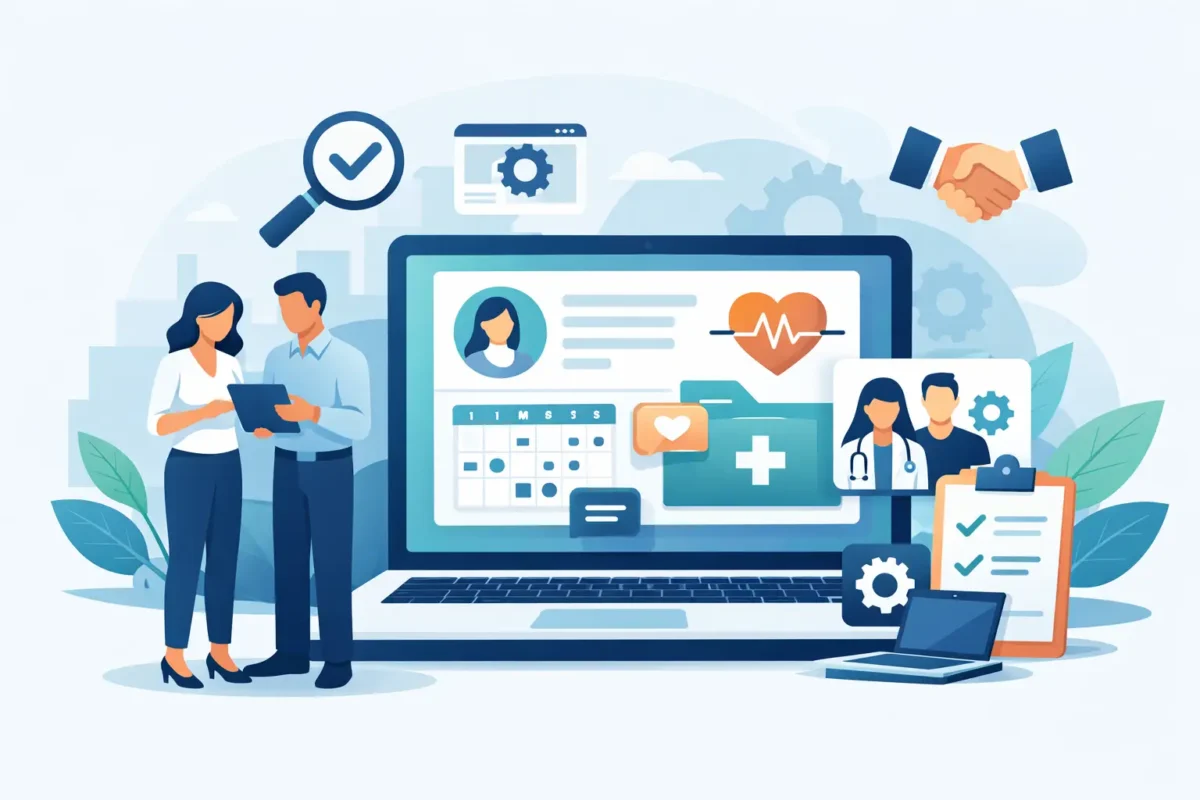
A patient portal that frustrates users does more than create support tickets. It slows staff, delays payments, increases call volume, and weakens the patient experience at the exact point where convenience matters most. That is why choosing the right patient portal development company is a business decision, not just a technical one.
For healthcare practices, clinics, pharmacies, and multi-location provider groups, the portal often becomes the front door to digital care. Patients use it to schedule visits, review records, request refills, complete forms, pay balances, and message staff. Internally, teams depend on it to reduce manual work and keep communication organized. If the system is hard to use, poorly integrated, or built without compliance in mind, the damage shows up quickly in operations.
What a patient portal development company should actually deliver
A capable patient portal development company should not start by showing design mockups alone. It should start by understanding how your organization works. A solo practice with basic scheduling needs is not the same as a specialty clinic managing referrals, recurring visits, prior authorizations, and secure clinical communication. A pharmacy portal has different needs again, especially around refill workflows, prescription status visibility, and patient identity verification.
The real job is to build a portal around your workflows, your systems, and your compliance obligations. That usually includes secure authentication, appointment booking, intake forms, document access, billing and payment support, prescription or refill requests, patient messaging, and admin controls for staff. In many cases, it also means connecting the portal with an EHR, EMR, CRM, telehealth platform, lab system, or payment gateway.
Customization matters here. Off-the-shelf products can work for some organizations, but they often force teams to adapt their operations to the software. A custom development partner should do the opposite. The portal should support how your staff actually works while improving efficiency where the process is outdated or manual.
Why healthcare organizations outgrow generic portal tools
Generic platforms are attractive at first because they promise speed and lower upfront costs. Sometimes that trade-off makes sense, especially for smaller providers with very simple needs. But once your organization needs tighter integrations, role-based access, custom patient journeys, branded experiences, or multi-location support, limitations start to appear.
A portal that cannot match your intake process, billing rules, communication flow, or reporting needs becomes a workaround machine. Staff end up entering the same data twice. Patients get inconsistent information. Administrators rely on email and phone calls to fill the gaps the portal should have solved.
This is where a custom-focused patient portal development company becomes valuable. It can design the system around your business model rather than forcing your team into a template. That does not always mean building everything from scratch. In some cases, the best answer is a hybrid model using existing healthcare platforms, APIs, and custom modules. The right partner should be honest about that.
Key capabilities to look for in a patient portal development company
Security and compliance should be built into the project from day one. In healthcare, that means secure data handling, controlled access, audit trails, encrypted communication, and a clear understanding of HIPAA requirements. If a company treats compliance as a final checklist item, that is a warning sign. It needs to shape the architecture, feature planning, and testing process from the start.
Integration capability is just as important. A portal rarely works in isolation. It needs to exchange data with the systems your team already uses. That may include EHR platforms, scheduling software, practice management tools, billing systems, telemedicine apps, and pharmacy workflows. A development partner should be prepared to map data flows carefully and explain what can be synced in real time, what may require batch processing, and where limitations exist due to third-party systems.
Usability also deserves more attention than many buyers give it. Patients are not trained users. They include older adults, busy parents, caregivers, and people accessing the portal from a mobile phone with limited time and patience. If the interface is cluttered or confusing, adoption drops. A good portal should make routine tasks obvious and reduce friction at every step.
Scalability matters if your organization plans to grow. Today you may need basic appointment access and messaging. Six months from now, you may want telehealth, digital forms, multilingual access, reminders, or analytics dashboards. A strong development company builds with future expansion in mind so you are not replacing the system after the next phase of growth.
Questions that reveal whether a vendor is the right fit
Ask how the company handles discovery. If the answer skips directly to pricing and timelines without discussing users, workflows, compliance, and integrations, the process is too shallow. Good discovery saves money because it reduces rework later.
Ask who will lead the project and how communication works. Many portal projects fail because decision-makers do not get clear updates, technical issues are buried, or feature changes are made without understanding operational impact. You need a team that is organized, transparent, and responsive.
Ask how testing will be handled. In a patient-facing system, testing is not just about whether a button works. It should cover security, performance, mobile responsiveness, role-based permissions, data accuracy, and user acceptance. A portal may look complete in a demo and still fail in production if testing is weak.
Ask what happens after launch. Healthcare systems need maintenance, updates, monitoring, and support. Regulations change, patient expectations change, and your internal needs change. A patient portal development company should be prepared for long-term support, not just project delivery.
Red flags decision-makers should not ignore
Be cautious of any company that speaks in broad promises but avoids specifics. If they cannot explain how they approach HIPAA-sensitive workflows, third-party integrations, or patient identity management, they may not have enough healthcare depth.
Another red flag is overengineering. Some vendors pitch complex platforms with features your organization will not use for a year or more. That drives up cost and delays adoption. The right build should match your current priorities while leaving room to expand. More technology is not always better technology.
You should also watch for design-first sales conversations that ignore operations. A polished interface matters, but portal success is measured by reduced administrative burden, faster patient self-service, fewer missed communications, and better data flow between systems.
Cost, timeline, and trade-offs
There is no universal price for a custom portal because the cost depends on feature scope, integrations, compliance needs, user roles, and whether you are modernizing an existing system or building a new one. A basic portal with limited integration can move faster and cost less. A more advanced portal with secure messaging, billing, prescription workflows, and EHR connectivity will take more planning and engineering time.
The better question is not what the cheapest option costs. It is what the wrong system will cost you over time. If staff still spend hours on phone scheduling, manual intake, and repeated patient follow-up, the operational losses add up. If patients avoid the portal because it is confusing, your investment underperforms no matter how little you paid upfront.
A practical partner will help you prioritize. Sometimes phase one should focus on high-impact functions such as appointments, forms, messaging, and payments. More specialized features can follow once adoption is strong and the core experience is stable.
Why business alignment matters as much as technical skill
The best patient portal projects happen when the development partner understands both software and healthcare operations. That means knowing how front-desk teams work, how providers document care, how billing affects patient satisfaction, and how digital tools influence growth and retention.
This is especially important for organizations that want one partner to support broader digital needs, from application development to website improvements, patient acquisition, and ongoing system support. A company like AdonisTechs can be valuable in that environment because it combines custom healthcare technology work with practical business-facing digital services. For growing organizations, that kind of alignment reduces handoff problems and keeps execution focused.
A patient portal should not be treated as a standalone app. It is part of your patient experience, part of your workflow infrastructure, and part of how your organization presents itself in a competitive market.
Making the right decision
Choosing a patient portal development company comes down to fit. You need a partner that can build securely, integrate intelligently, communicate clearly, and adapt the solution to your operational reality. The strongest option is rarely the one with the flashiest demo. It is the one that understands where your bottlenecks are, where compliance risk sits, and how to turn the portal into a working asset for both patients and staff.
If you are evaluating providers, focus on the long-term result: a portal that patients will actually use, a system your staff can trust, and a platform that supports growth instead of creating more work. That is where the real return comes from.